Net-zero mindset
Operational energy, process efficiency, and feedstock choices are managed as part of long-range competitiveness, not separate from it.
Celanese brings polymer science, manufacturing discipline, and customer collaboration together so manufacturers can design with confidence while adapting to faster sustainability, supply, and performance expectations.
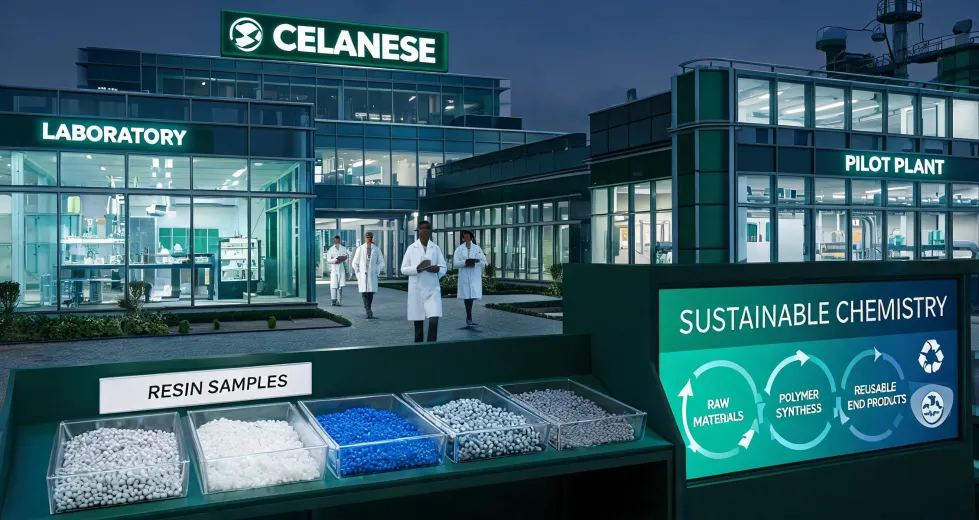
Celanese is positioned around the practical side of advanced chemistry. Customers do not come to a polymer partner for a slogan; they come with a dimensional tolerance problem, a new compliance request, a processing constraint, or a part that must perform more consistently in a demanding environment. Our teams translate those problems into material options, test plans, and documentation that can move through engineering, procurement, quality, and manufacturing without losing the original intent.
That translation matters because material decisions now carry more consequences. A resin grade may influence energy use, cycle time, regulatory exposure, failure risk, recyclability, and inventory strategy. Celanese therefore treats material selection as a connected decision rather than a one-line specification.
Our culture values curiosity with discipline. Scientists, technical service engineers, production teams, and commercial specialists work across boundaries so a customer can receive answers that are both technically sound and operationally realistic. A formulation that succeeds in a lab must still run through equipment, ship across regions, comply with documentation requirements, and satisfy the people who use it on the production floor.
Celanese supports that path with application labs, manufacturing experience, and consistent communication. We aim to reduce the friction that appears when product development, procurement, regulatory, and plant operations are forced to solve the same material question separately.
Innovation is useful only when it changes outcomes. For Celanese, progress means higher material efficiency, better durability, clearer documentation, lower waste, more stable supply, and practical routes toward circularity. We invest in digital tools, process knowledge, and sustainability programs because customers need decisions that can be defended with data rather than aspiration.
The company continues to evolve as markets change. Automotive lightweighting, electronics reliability, medical material expectations, industrial productivity, and consumer product design all ask more of polymers. Celanese helps customers respond with a portfolio and service model designed for that complexity.
Operational energy, process efficiency, and feedstock choices are managed as part of long-range competitiveness, not separate from it.
We develop material programs that consider durability, reuse potential, mass balance options, and responsible end-of-life conversations.
Teams work across regions, functions, and customer organizations to make technical decisions clearer and easier to act on.
Ratings and frameworks help customers compare progress, but our operating focus remains direct: safer sites, clearer product stewardship, lower-impact materials, and more transparent communication about what each product can and cannot do.
Request a concise overview of Celanese material platforms, sustainability priorities, and technical service model for your internal review.